
Digital Echoes of the Analogue Past
Submitted by Atlas Indicators Investment Advisors on October 31st, 2025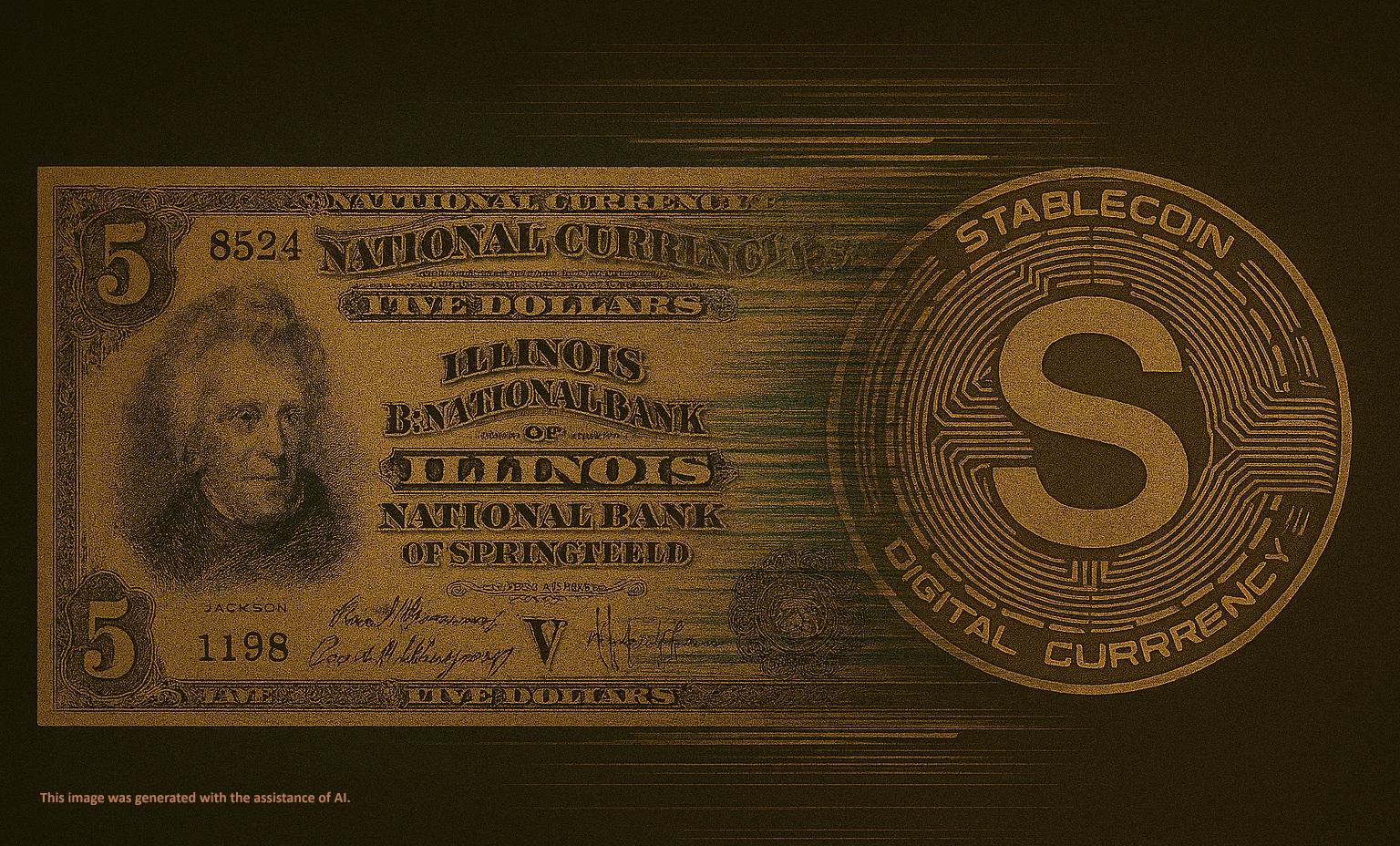
Stablecoins have been making a lot of headlines lately. Atlas has been fielding calls about them and has a relatively naïve understanding of the new technology. We’ve recently looked at this note from the New York Federal Reserve and this Article from the Economist to help get some clarification. It appears that while the technologies behind these means of transaction are budding, other characteristics of them sound like an era gone by.
These coins are a unique type of cryptocurrency designed to maintain a steady value, typically by being pegged to a reserve asset such as the U.S. dollar. Unlike traditional cryptocurrencies, which can fluctuate significantly in price, stablecoins aim to make digital money as dependable as physical cash or funds in a bank account. This stability is achieved by ensuring that each stablecoin is backed by something of value (e.g., dollars held in a bank, government bonds, or other assets) in hopes of giving users confidence that each coin is truly worth a dollar, or close to it.
According to the Economist article, the “Guiding and Establishing National Innovation for U.S. Stablecoins Act” (GENIUS) Act does not allow the coin issuers to pay interest, but the innovators have already found a loophole. Stablecoin issuers create the coins but commerce happens on platforms or exchanges that can offer incentives for utilizing their ecosystems for transactions. For now, these exchanges do not need to meet capital requirements or liquidity standards for their incentives, something typically monitored by a public regulator.
This concept isn’t entirely new. Between 1863 and 1935 in the United States, paper money known as national bank notes was issued by private banks rather than the federal government. These notes were backed by reserves, specifically, U.S. Treasury bonds held by the issuing banks. As with stablecoins, public trust in these bank notes depended on the reliability of the issuing bank and the existence of actual reserves. The backing of reserves made both national bank notes and modern stablecoins more stable and widely accepted than unbacked money or volatile cryptocurrencies.
There are notable similarities and differences between stablecoins and national bank notes. Both are forms of money issued by private entities rather than the government, and both promise redemption at a fixed value when presented to the issuer. However, just as with national bank notes in the 1800s, the value and acceptance of a stablecoin can hinge on the reputation and practices of the issuing company or platform. Issues may arise if people begin to doubt whether the issuer or exchange truly holds sufficient reserves or will honor redemption requests. Historically, such concerns led to reforms and the eventual dominance of government-issued currency. This history sheds some light on current debates about how to regulate stablecoins and underscores why trust in the issuer remains a critical issue.
