
Wet, With a Chance of Hope
Submitted by Atlas Indicators Investment Advisors on September 30th, 2026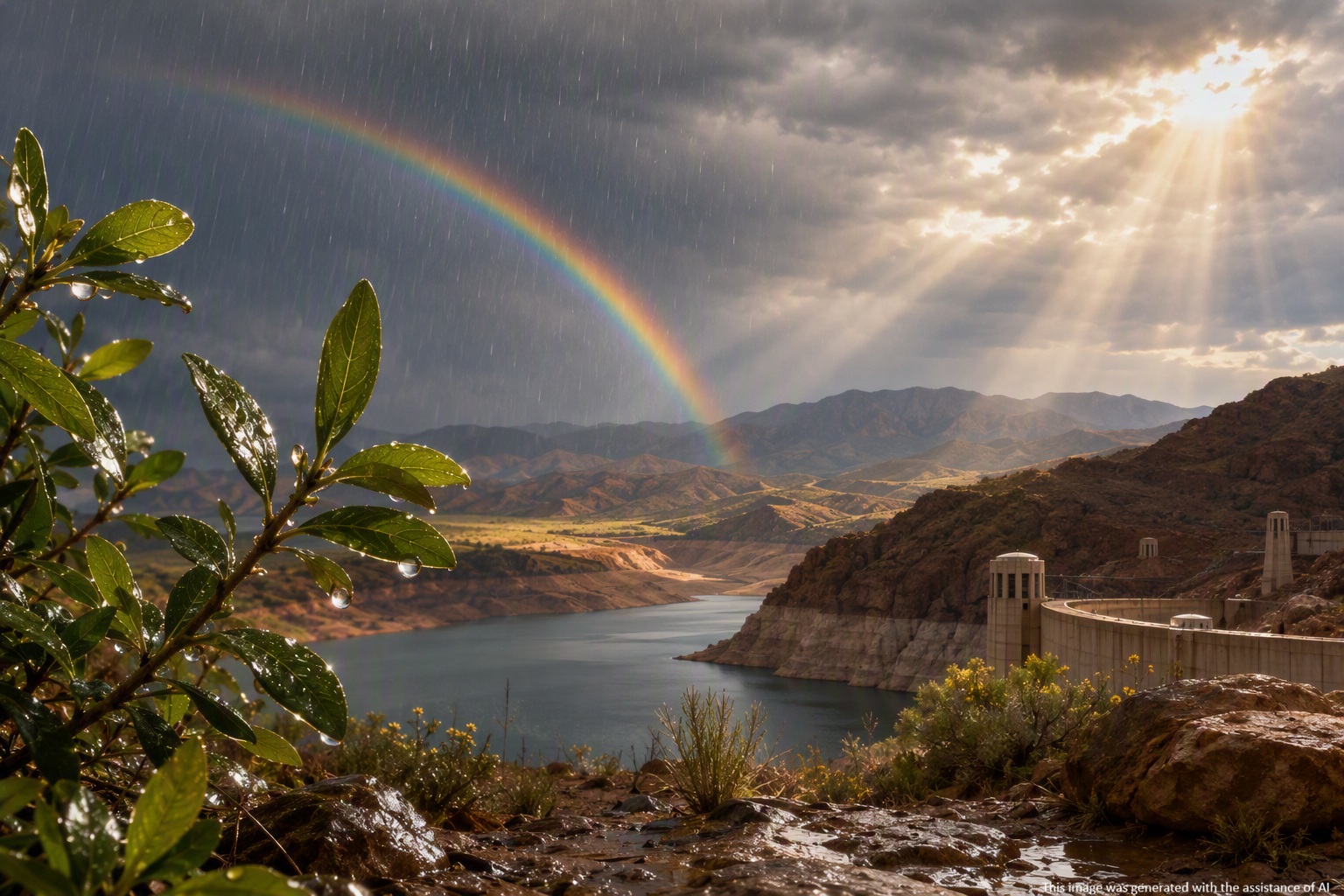
Water is a vital economic input. Besides satiating one’s thirst in the middle of summer, it gets used in agriculture, energy production, manufacturing, mining, construction, transportation, and waste. Shortages in the Western United States are already pushing up costs on many of the previously mentioned uses. But El Nino is coming. Could that help?
According to this article from the Federal Government, the Colorado River Basin (which touches seven western states) lost about 27.8 million acre-feet of water from 2002-2024. For some context, this is roughly the storage capacity of Lake Mead. This basin irrigates farms in many of those seven states but is used mostly in California and Arizona. Approximately 70% of the water used from the river goes to agriculture, irrigating roughly 5.5 million acres. Hey, people gotta eat. But food is only part of the story. Between 35 and 40 million people depend on the river to fulfill at least part of their municipal water needs.
Other than consuming it directly as a drink or indirectly as food, Americans in the West use the river to generate power. Lower reservoir levels constrain hydropower output, potentially forcing dependence on more costly forms of electric generation. In September 2025, www.drought.gov warned that Lake Powell could fall low enough to stop hydropower generation at the reservoir by December of this year.
The most recent prediction from the National Weather Service is a 90% chance of a strong El Nino event in the Northern Hemisphere during the coming fall and winter. These events tend to favor above-normal precipitation across parts of the southern United States, including Southern California. Such an event could offer some relief to this dry section of the country, but it does not guarantee reservoir-filling levels nor the snowpack necessary for longer-term relief.
Water remains a scarce and therefore increasingly valuable economic input. Its future availability will likely influence everything from food prices to energy costs and even have an impact on regional population growth. Like many structural economic challenges (e.g., debt and deficit levels) a few months of favorable conditions in a portion of the country will help, but lasting solutions will require designed planning instead of relying on default.
