
Cracking Up
Submitted by Atlas Indicators Investment Advisors on September 30th, 2026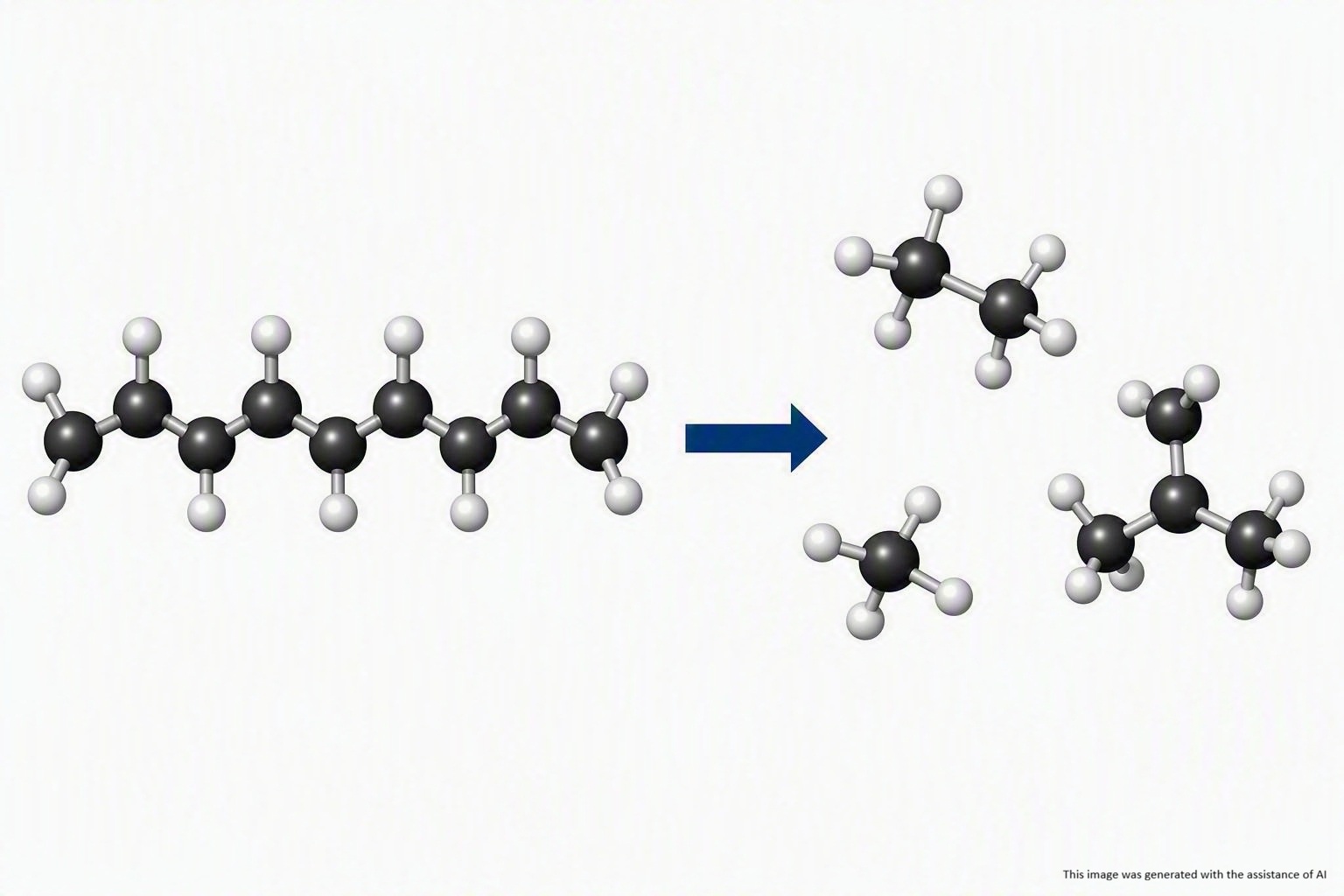
Rudolph Diesel patented a compression-ignition engine long before diesel fuel was standardized. In 1893, Germany granted him the patent, a year after he applied for it. Shortly thereafter, America granted him one as well. Mr. Diesel created an engine that could use the eponymous petroleum distillate diesel as it does today but also runs on other fuels including vegetable oils and even residual oils! This flexibility was handy because there was unevenness in regional mixes and distribution of fuel during the first few decades of the engines’ use.
Today diesel fuel has standards which are met through refining and a process called cracking. Crude oil is processed using a combination of heat, pressure, and catalysts (e.g., hydrogen) to break chemical bonds connecting molecules into smaller hydrocarbon chains. The resulting compounds are used as fuels, plastics and other products. But the relationship between crude oil and the results of its cracking is not just chemical.
Introducing the crack spread. If it sounds like something your money might slip through, you’re on to something. Simply, it is the price differential between a barrel of crude oil and a barrel of the finished product. Recently, the diesel crack has been elevated, reaching over $100 last week. This is primarily a capacity issue. According to the U.S. Energy Information Administration, America’s refineries were run at 97.4% of their potential last week, leaving little room for more output. This happened against a backdrop where global capacity has been destroyed or is unavailable in countries like Russia, Venezuela, Saudi Arabia, and Kuwait.
An elevated crack spread pushes diesel prices higher relative to a barrel of oil. This upward price pressure is being forced upon America’s logistics. Freight trains, semi-trucks, and cargo ships, not to mention farm equipment, run on diesel. All else equal, this added cost gets absorbed by either tighter margins for firms or higher prices for end consumers.
The growing diesel crack spread may be a bit obscure, but its upward pressure on prices feels all too familiar. As long as refining capacity remains tight, it stands to reason that higher diesel prices will travel through supply chains and into the budgets of America’s companies and consumers. Rudolph Diesel designed his engine to run on a variety of fuels. Since then, his invention has been refined to run on just one, and its supply is under pressure.
